
But what exactly is film faced plywood, and why is it so widely used in formwork applications? This guide explains everything in a practical and easy-to-understand way.
What Is Film Faced Plywood?
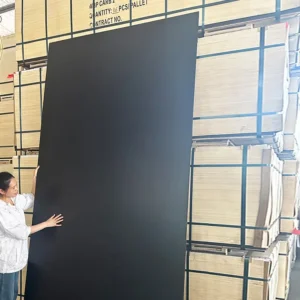
Film faced plywood is an engineered wood panel made by bonding multiple layers of veneer together and coating both sides with a protective phenolic film.
This outer layer provides several key advantages:
- Water resistance
- A smooth and non-stick surface
- Improved durability under heavy use
Because of these properties, film faced plywood performs much better than standard plywood in construction environments.
What Is Film Faced Plywood Used For?
Film faced plywood is mainly used in construction and temporary structural applications.
1. Concrete Formwork
- Slabs
- Walls
- Columns
- Beams
2. Infrastructure Projects
- Bridges
- Tunnels
- High-rise buildings
3. Temporary Construction Structures
- Platforms
- Site supports
Why Film Faced Plywood Is Used in Formwork
Film faced plywood is especially popular in formwork due to its performance advantages.
1. High Reusability
One of its biggest benefits is its ability to be reused multiple times.
- Standard plywood: typically 3–5 uses
- Film faced plywood: often 10–20 uses or more
This helps reduce overall material costs.
2. Smooth Concrete Finish
The coated surface allows for:
- Cleaner finishes
- Fewer surface defects
- Reduced need for additional finishing work
3. Water and Moisture Resistance
Construction sites often involve exposure to water and cement. Film faced plywood resists:
- Swelling
- Warping
- Delamination
4. Easy Release from Concrete
The smooth film surface prevents sticking, making removal:
- Faster
- Easier
- Less damaging to the panel
Key Specifications of Film Faced Plywood
When selecting plywood for formwork, understanding the basic specifications is essential for performance and durability.
| Specification | Options | Description |
|---|---|---|
| Thickness | 12mm / 15mm / 18mm | Thicker panels provide higher load-bearing capacity |
| Core Material | Poplar / Hardwood / Birch | Poplar is cost-effective, hardwood is stronger, birch offers premium performance |
| Glue Type | WBP / Phenolic | Waterproof bonding for outdoor and construction use |
| Surface Film | Brown / Black | Brown for standard use, black for higher durability and reuse |
Choosing the right combination of thickness, core material, and glue type can significantly impact the lifespan and performance of formwork plywood.
Real Project Example
In a residential construction project in Southeast Asia, contractors initially used standard plywood for slab formwork. However, due to high humidity and repeated usage, the panels began to lose strength after only a few cycles.
After switching to film faced plywood:
- Reuse cycles increased from around 4 to over 10
- Concrete surface quality improved noticeably
- Labor time for removal decreased
This resulted in better efficiency and lower long-term costs.
Common Mistakes to Avoid
When choosing plywood for formwork, some common mistakes include:
- Focusing only on the lowest price
- Ignoring glue quality and water resistance
- Using indoor-grade plywood for outdoor construction
Choosing the right material from the start can prevent costly issues later.

How to Choose the Right Film Faced Plywood
Choosing the right plywood for formwork depends on project requirements, environment, and expected reuse cycles. Using high-quality film faced plywood can significantly improve durability, concrete finish, and overall efficiency in construction projects.
FAQ: Film Faced Plywood
Is film faced plywood better than normal plywood for construction?
Yes, it is specifically designed for construction use and offers better durability, water resistance, and reusability.
How many times can film faced plywood be reused?
Typically 10–20 times, depending on quality and handling conditions.
What thickness is best for concrete formwork?
18mm is commonly used for heavy-duty applications, while thinner panels may be suitable for lighter structures.
What is the difference between film faced plywood and commercial plywood?
Film faced plywood is mainly used for concrete formwork due to its durability and smooth surface, while commercial plywood is typically used for general indoor applications where high moisture resistance and repeated use are not required.
How can you extend the lifespan of film faced plywood?
- Clean after use
- Store properly
- Avoid edge damage
- Use release agents
Conclusion
Selecting the right plywood for formwork is not just about cost, but also about durability, efficiency, and long-term performance.
Taking the time to evaluate different materials and specifications can help ensure better results and smoother project execution.