Author name: fortunaply.com

Shandong Fortuna International Trade Co., Ltd. Founded in 1990s in linyi city , It is one of the largest wooden panel manufacturers in China . Mainly exports Plywood ,Film Faced Plywood , Melamine boards, MDF ,OSB Boards for global importers, furniture factories, construction companies and building material wholesalers . The high quality plywood and film faced plywood passed US CARB 2, Europe CE, EUTR, FSC , ISO and China plywood standard . We supply top quality film faced plywood made of hardwood, birch or poplar . Our furniture plywood,Furniture MDF and furniture Particleboard are sold to big furniture factories with best-know brands in Canada,US, Belgium , Denmark Europe markets.

moisture resistant mdf when and where to use it 2

Moisture-Resistant MDF: When and Where to Use It

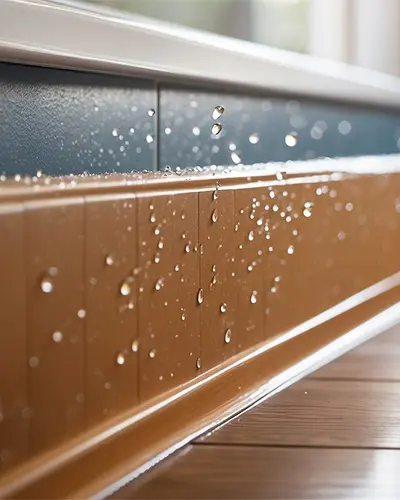
Medium-Density Fiberboard (MDF) is a staple in furniture and cabinetry for its smooth surface and affordability. However, its one major weakness is its vulnerability to moisture. Standard MDF acts like a sponge, swelling and crumbling upon contact with water, making it unsuitable for many areas of the home.This is where Moisture-Resistant MDF (often called MR MDF or “green MDF” due to its distinctive green-tinted core) comes to the rescue. But what exactly is it, and is it the right choice for your bathroom or kitchen project? This guide will break down when and where to use this specialized material and when to choose a more robust alternative. 1. What is Moisture-Resistant MDF? (It’s Not Waterproof) First, it’s crucial to understand what MR MDF is—and what it is not. The Technology: MR MDF is manufactured with specialized resins and wax additives that are blended with the wood fibers during production. These additives significantly reduce the board’s ability to absorb moisture from the air and resist swelling better than its standard counterpart. The Key Distinction: Moisture-Resistant is not Waterproof. MR MDF is designed to handle humid environments and occasional minor splashes. It is not designed to be soaked, submerged, or have standing water left on its surface. Think high humidity, not direct and constant water exposure. 2. The Best Uses for Moisture-Resistant MDF Thanks to its improved resilience, MR MDF is perfect for a range of applications where standard MDF would fail. Bathroom Vanities and Cabinets: This is the prime use case. MR MDF can handle the steam from showers and occasional sink splashes without deteriorating, making it an excellent choice for vanity carcasses (the main box structure). Kitchen Cabinetry: Especially useful for cabinets near the sink or dishwasher where humidity and minor spills are common. It’s a great material for painted cabinet doors and panels. High-Humidity Climates: If you live in a region with consistently high humidity, MR MDF is a smarter choice for any interior furniture than standard MDF, which can swell from ambient moisture alone. Interior Trim and Millwork: Use it for baseboards, crown molding, and wainscoting in bathrooms, kitchens, laundry rooms, and basements where moisture levels fluctuate. Commercial Interior Projects: Ideal for retail displays, office furniture, and other commercial interiors that require a durable, paintable surface that can handle being cleaned. 3. Understanding Its Limitations: Where NOT to Use It Knowing the limits of MR MDF will save you from a costly repair job down the line. Avoid using it in these situations: Direct Water Exposure: Do not use it for shower or tub surrounds, saunas, or outdoor furniture. It will not survive direct and constant water contact. Horizontal Surfaces Prone to Spills: While okay for kitchen cabinets, it is not suitable for countertops or bar tops where drinks, water, and other liquids will regularly pool and sit. Subflooring or Structural Applications: MR MDF has no structural strength and should never be used for subfloors, wall sheathing, or any load-bearing application. Areas with Poor Ventilation: Even MR MDF can eventually succumb to chronic, extreme dampness. If a room like a basement or bathroom has no ventilation, a plastic-based material or plywood is a safer bet. 4. Pro Tips for Working with MR MDF To get the most out of your moisture-resistant MDF, follow these best practices: Seal All Edges and Cut Lines: The core of MR MDF is more resistant than standard MDF, but it is still vulnerable at any cut edge. Always seal exposed edges with a high-quality primer, paint, or edge banding. Use the Right Fasteners: Because it’s dense, pre-drill holes for screws to prevent splitting. Use specialized screws designed for MDF for the best holding power. Protect the Surface During Installation: While durable, the laminate surface can be scratched. Handle with care during the build process. Ensure Proper Ventilation: Even after installation, help your project last longer by ensuring the room has adequate ventilation (e.g., using a bathroom fan) to remove excess humidity. Final Verdict: Is Moisture-Resistant MDF Right for You? Yes, if… your project is for an interior space with high humidity or the risk of occasional splashes, and you need a smooth, affordable, and paintable material. Bathroom vanities, kitchen cabinets, and interior trim in damp areas are its sweet spot.No, if… the material will be exposed to direct, standing water or weather. For those applications, you need to look to marine-grade plywood, PVC, or other solid plastics.

Moisture-Resistant MDF: When and Where to Use It Read More »
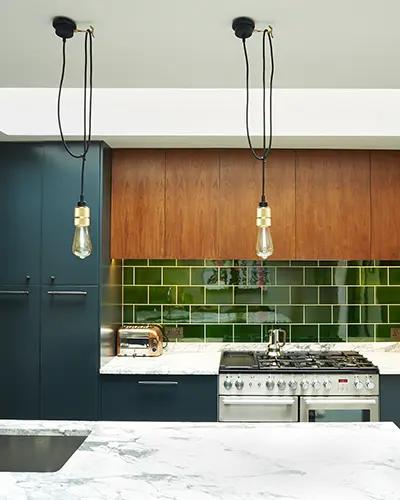
why mdf is the secret weapon of interior designers 2

Why MDF is the Secret Weapon of Interior Designers

Walk into any beautifully designed modern home, boutique hotel, or chic office space, and you’re likely looking at MDF. Medium Density Fiberboard is the unassuming material that professional designers consistently turn to to achieve high-end looks without the high-end price tag. But what makes this engineered wood product so indispensable? Here’s the inside scoop on why MDF is the industry’s best-kept secret. 1. The Perfect Canvas: A Flawless, Paintable Surface Ask any designer the number one reason they choose MDF, and the answer will be paint. Unlike solid wood, which has a visible grain, knots, and potential for uneven absorption, MDF has a completely smooth, homogeneous surface. Designer Benefit: This allows for an impeccably smooth, professional-grade finish with no grain bleed-through. It’s the ideal material for achieving rich, saturated colors and crisp, modern looks on cabinets, wall panels, and trim. The result is a flawless finish that looks custom and expensive. 2. Unbeatable Versatility for Custom Designs MDF is a dream for custom fabrication. It can be cut, routed, and shaped into virtually any form a designer can imagine. Designer Benefit: This versatility allows for the creation of unique elements that define a space. From intricate laser-cut wall art and geometric room dividers to custom-built headboards with detailed moulding and handle-less, modern cabinet fronts, MDF brings bespoke designs to life without the cost of custom solid wood millwork. 3. Budget-Friendly: High-End Look for Less Achieving a luxury aesthetic without a luxury budget is a core skill of a great interior designer, and MDF is a critical tool in this effort. Designer Benefit: MDF is significantly less expensive than high-quality solid wood or plywood. This cost savings allows designers to allocate the budget to other impactful areas, such as statement lighting, high-end hardware, or luxurious textiles, while still delivering a sophisticated and custom-built look with the MDF elements. 4. Stability and Consistency: No Warping or Expanding Solid wood is a natural material that reacts to its environment—it can expand, contract, warp, or crack with changes in humidity and temperature. Designer Benefit: MDF, being an engineered product, is incredibly dimensionally stable. It won’t warp or shrink under normal conditions, which is crucial for large projects like built-in shelving units, long spans of trim, or flat cabinet doors. Designers can specify it with confidence, knowing the finished product will remain precisely as installed. 5. The Ideal Material for Modern & Statement Walls Feature walls are a cornerstone of modern interior design, and MDF is the go-to material for creating them. Designer Benefit: MDF is perfect for crafting everything from classic wainscoting and shaker-style panels to dramatic floor-to-ceiling slat walls and complex geometric designs. Its large, smooth sheets provide a seamless base, and its ability to be machined into precise strips allows for perfect consistency in patterns like board-and-batten. Once painted, these walls become a seamless, architectural element of the room. 6. Sustainability: An Eco-Conscious Choice Many clients are now prioritizing sustainable design, and MDF can be a part of that conversation. Designer Benefit: MDF is primarily manufactured from wood waste—chips and shavings from sawmills that would otherwise be discarded. By specifying MDF from manufacturers who practice sustainable forestry and use low-formaldehyde or no-added-formaldehyde (NAF) resins, designers can make a more environmentally responsible choice without compromising on design intent. The one non-negotiable rule designers follow? Proper sealing. The edges of MDF are porous and must be sealed with a high-quality primer or specialist MDF sealer before painting. This prevents the edges from absorbing moisture and swelling and ensures a perfect finish. For high-moisture areas like bathrooms, Moisture-Resistant (MR-MDF) is an absolute must.

Why MDF is the Secret Weapon of Interior Designers Read More »

10 surprising uses for mdf you haven't thought of 1

10 Surprising Uses for MDF You Haven’t Thought Of

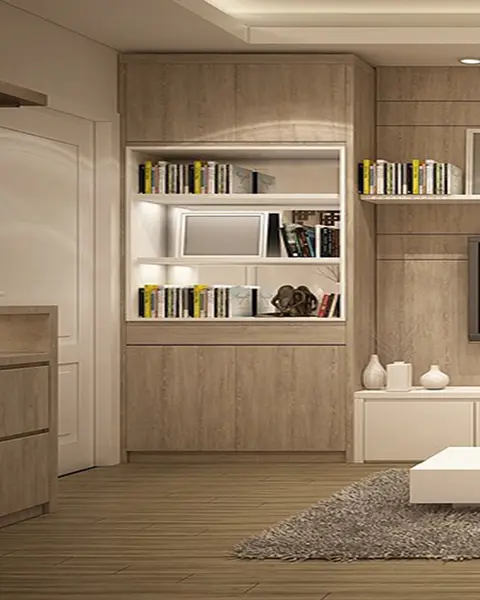
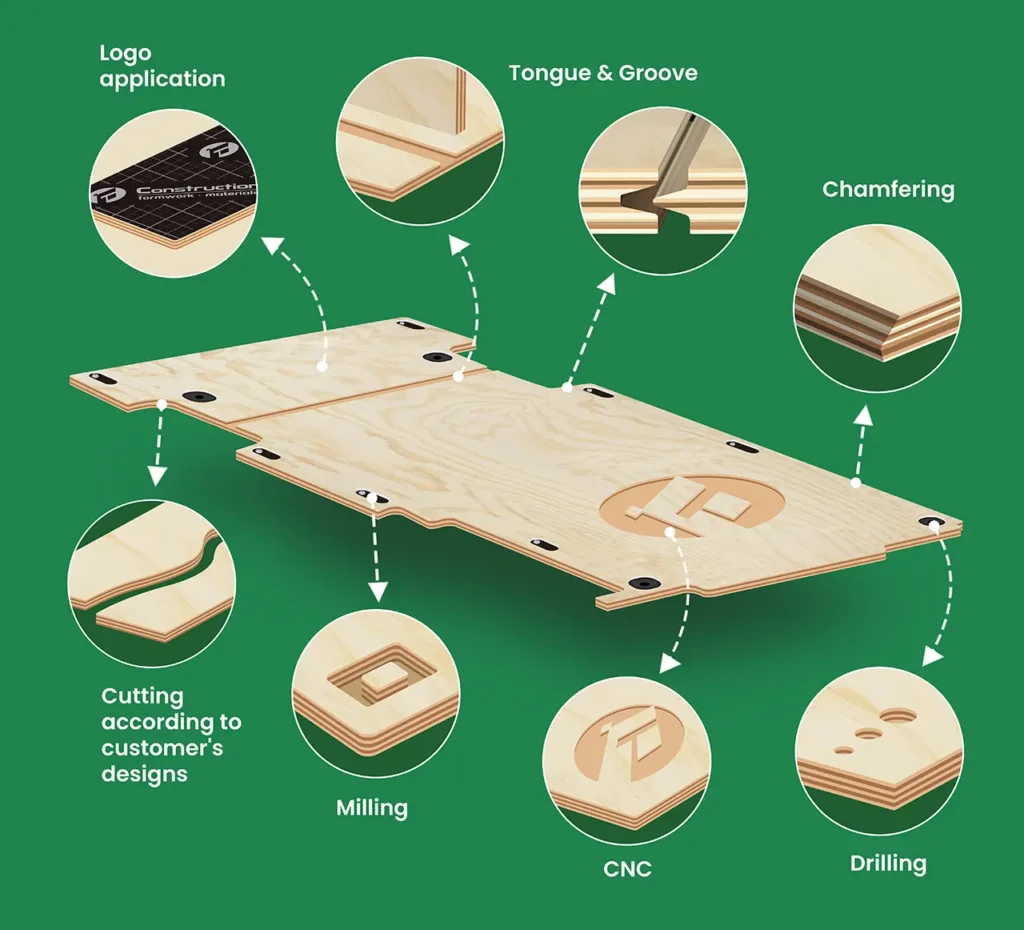
Medium Density Fiberboard (MDF) is often seen as a simple, budget-friendly building material for basic shelving and DIY projects. But its smooth surface, uniformity, and versatility make it a secret weapon for creative builders and designers. Move over, basic boxes! Here are 10 surprising uses for MDF that you probably haven’t considered. 1. High-End Looking Wainscoting and Wall Panels Forget the expensive custom millwork. MDF is the perfect material for creating classic wainscoting, modern shaker-style panels, or dramatic floor-to-ceiling wall features.Why it works: MDF sheets can be easily ripped down into strips on a table saw. Its perfectly smooth surface takes paint impeccably, leaving no grain or imperfections, giving you a flawless, professional finish. It’s significantly cheaper than solid wood moulding.Pro Tip: Use a high-quality primer designed for MDF to seal the edges before painting for a seamless look. 2. Statement Light Fixtures and Lampshades Who said light fixtures have to be made of metal or glass? MDF is being used by designers and DIYers to create stunning geometric pendants, sculptural sconces, and unique lampshades.Why it works: Its composition allows it to be laser-cut with intricate precision (or carefully cut with a jig saw). When paired with a good light source, the MDF glows warmly around the edges, creating a soft, ambient light effect.Pro Tip: For a lampshade, ensure you use low-heat LED bulbs to prevent any heat damage to the material.Why it works: MDF sheets can be easily ripped down into strips on a table saw. Its perfectly smooth surface takes paint impeccably, leaving no grain or imperfections, giving you a flawless, professional finish. It’s significantly cheaper than solid wood moulding.Pro Tip: Use a high-quality primer designed for MDF to seal the edges before painting for a seamless look. 3. Durable and Smooth Desktop or Workbench Top While not as moisture-resistant as plywood, MDF makes for an incredibly smooth and durable desktop or workbench surface, especially when properly sealed.Why it works: The uniform density provides a perfectly flat surface that’s ideal for writing, crafting, or even as a base for a CNC machine. It won’t warp or splinter like some plywood can.Pro Tip: Seal the surface with several coats of a tough polyurethane or a specialty MDF sealant. Attach it to a solid wood or metal frame for structural support. 4. Custom Built-In Shelving and Entertainment Centers MDF is a champion for building custom shelving units and entertainment centers that look built-in and painted.Why it works: It’s cost-effective for large projects. The smooth surface ensures a continuous, grain-free look once painted, making the entire unit look like one cohesive piece rather than something assembled from different boards.Pro Tip: Use iron-on edge banding on all visible edges before priming and painting for a perfect “solid material” appearance. 5. Kids’ Play Furniture and Creative Toys MDF is ideal for creating safe, sturdy, and colorful play items for children.Why it works: It has no splinters, unlike natural wood. It can be cut into any shape—think play kitchens, toy cars, dollhouses, or puzzle blocks—and then painted with non-toxic paint for a vibrant finish.Pro Tip: Always round over the edges with a router or sandpaper thoroughly to create soft, child-safe corners. 6. Artistic Canvases and Photo Backdrops Photographers and artists are using large sheets of MDF as a cheap, rigid, and versatile alternative to traditional canvases or backdrop paper.Why it works: A primed sheet of MDF provides a huge, unbroken surface to paint on or use as a neutral background for product photography. It can be repainted endlessly for different scenes or artworks.Pro Tip: For a truly seamless photo backdrop, use drywall joint compound to blend the seam where the wall meets the MDF sheet on the floor, creating a perfect “infinity curve.” 7. Sound Diffuser Panels for Home Studios Audiophiles and home podcasters can use MDF to build functional acoustic treatment panels known as diffusers.Why it works: While acoustic foam absorbs sound, diffusers (often with patterned blocks of different depths) scatter sound waves to reduce echoes and create a more balanced sound environment. MDF is heavy and easy to cut into precise shapes for this purpose.Pro Tip: Research specific diffuser designs like quadratic residue diffusers for the most effective acoustic results. 8. Modern Cabinet and Drawer Fronts For a sleek, modern, handle-less (aka integrated pull) kitchen or bathroom, MDF is the material of choice for many cabinet makers.Why it works: It’s incredibly stable and won’t expand and contract with seasons like solid wood, meaning doors and drawers won’t stick. It’s perfect for achieving a flawless, painted finish that is central to modern design aesthetics.Pro Tip: The key to using MDF in kitchens or bathrooms is to use moisture-resistant MDF (MR-MDF) and ensure all edges are thoroughly sealed with primer and paint. 9. Custom Headboards with Unique Shapes Create a stunning focal point in your bedroom with a custom MDF headboard.Why it works: MDF can be cut into any shape your imagination desires—from a simple arched design to a complex geometric pattern. It provides a solid base for upholstery or a perfect surface for a bold paint color.Pro Tip: For an upholstered look, add a layer of foam batting and your favorite fabric over the MDF shape before mounting it to the wall. 10. Functional Home Accessories and Organizers From chic floating shelves to elegant picture frames and desk organizers, MDF is perfect for small, functional projects.Why it works: Its ease of cutting and finishing allows you to create cohesive, custom accessories that match your decor perfectly. You can build a desk organizer with specific slots for your gadgets or a magazine rack that fits that exact nook by your chair.Pro Tip: A little router work can add decorative edges to these small items, elevating them from homemade to high-end. MDF’s potential is only limited by your creativity. With the right tools, sealing, and a bit of imagination, you can use this humble material to create stunning, durable, and surprisingly high-end projects for every room in your house.

10 Surprising Uses for MDF You Haven’t Thought Of Read More »

plywood vs solid wood for furniture durability cost & best uses 1

Plywood vs. Solid Wood for Furniture: Durability, Cost & Best Uses

When choosing furniture, durability is a key concern. Two of the most common materials—plywood and solid wood—each have their strengths and weaknesses. But which one lasts longer? This guide compares plywood and solid wood in terms of longevity, maintenance, cost, and suitability for different furniture types, helping you make an informed decision. 1. Durability: Which Material Holds Up Better Over Time? Solid Wood: Classic Strength with Some Vulnerabilities Solid wood is prized for its natural beauty and sturdiness. High-quality hardwoods like oak, maple, and walnut can last decades, even centuries, with proper care. However, solid wood is susceptible to: Warping and cracking due to humidity changes. Insect damage (e.g., termites) if untreated. Scratches and dents that require refinishing. Plywood: Engineered for Stability Plywood, made by layering thin wood veneers with adhesive, offers better resistance to: Moisture warping, making it ideal for kitchens and bathrooms. Expansion/contraction, as its cross-grain construction reduces movement. Structural stress, making it a strong choice for shelves and cabinets. Winner for Durability? Solid wood excels in long-term resilience if maintained well. Plywood wins in humid environments and for heavy-use furniture. 2. Cost & Maintenance: Which Is More Budget-Friendly? Solid Wood: Higher Initial Cost, Long-Term Investment Pros: Increases in aesthetic value over time. Can be sanded and refinished multiple times. Cons: Expensive upfront (e.g., solid oak vs. plywood cabinets). Requires regular polishing and humidity control. Plywood: Affordable and Low-Maintenance Pros: Cheaper than solid wood, making it ideal for budget projects. Requires minimal upkeep—no refinishing needed. Cons: Cannot be refinished if the top veneer is damaged. Lower-end plywood may delaminate over time. Best for Budget? Plywood is the economical choice for mass-produced furniture. Solid wood is better for heirloom-quality pieces. 3. Best Uses: Which Material Works for Different Furniture Types? Best for Solid Wood: Tables & chairs (high durability with proper care). Bed frames & dressers (aesthetic appeal and longevity). Antique-style furniture (natural grain enhances value). Best for Plywood: Kitchen cabinets (resists moisture better). Bookshelves & storage units (strong, stable layers for heavy loads). Modern, flat-pack furniture (cost-effective and lightweight). Final Verdict: Which Should You Choose? For longevity in dry, stable environments: Solid wood is superior.For humid climates or budget-friendly projects: Plywood is more practical.By understanding the strengths of each material, you can select the best option for your furniture needs. Whether you prioritize natural beauty or engineered resilience, both plywood and solid wood have unique advantages that make them suitable for different applications.

Plywood vs. Solid Wood for Furniture: Durability, Cost & Best Uses Read More »

plywood kitchen cabinets affordable & customizable option 1

Plywood Kitchen Cabinets: Affordable & Customizable Option

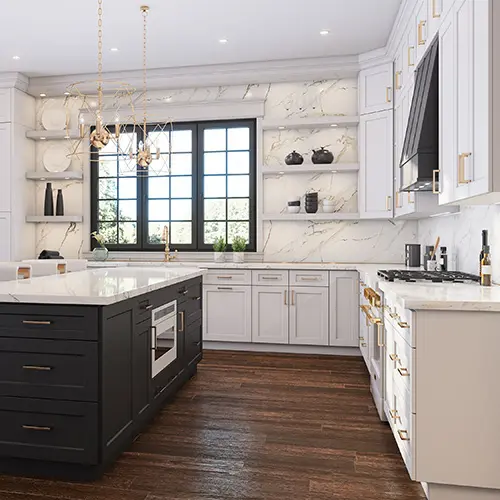
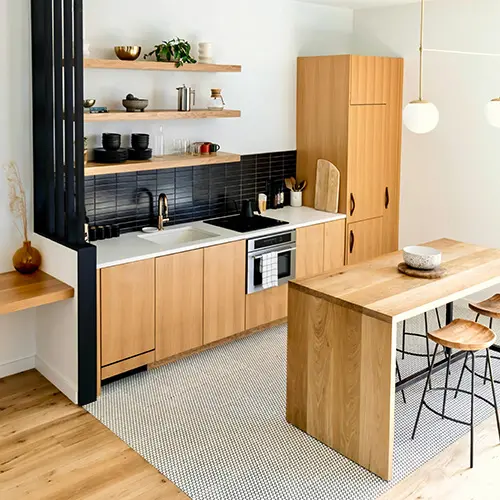
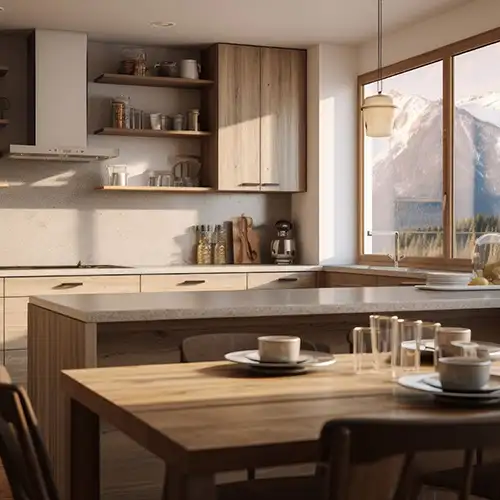
When designing or renovating a kitchen, choosing the right cabinetry material is crucial. Plywood kitchen cabinets have gained popularity for their affordability, durability, and customization potential. Unlike solid wood or particle board, plywood offers a balanced mix of strength and cost-effectiveness. In this blog, we’ll explore why plywood cabinets are a smart choice, their benefits, and how you can customize them to fit your kitchen style. Why Choose Plywood for Kitchen Cabinets? Plywood is an engineered wood made by layering thin sheets of wood veneer, bonded with strong adhesives. This construction makes it:Durable: Resists warping and cracking better than MDF or particle board.Cost-effective: More affordable than solid wood but stronger than cheaper alternatives.Moisture-resistant: Ideal for kitchens, especially when using marine-grade plywood.Eco-friendly: Uses less solid wood, reducing environmental impact.Compared to MDF (Medium-Density Fiberboard) or particle board, plywood holds screws better and withstands heavy loads, making it perfect for long-term use. Customizing Plywood Cabinets to Fit Your Style One of the biggest advantages of plywood cabinets is their versatility. Here’s how you can customize them:Paint or Stain: Plywood takes paint and stain beautifully, allowing for any color scheme.Door Styles: Choose from Shaker, flat-panel, or slab doors for a modern or traditional look.Hardware Options: Upgrade with sleek handles, knobs, or soft-close hinges.Open Shelving: Combine closed cabinets with open plywood shelves for a trendy aesthetic.For a high-end look without the cost, consider adding veneer or laminate finishes that mimic expensive hardwoods like oak or walnut. Plywood vs. Other Cabinet Materials How does plywood compare to other common cabinet materials? Plywood Pros: Strong, customizable, moisture-resistantCons: Slightly more expensive than MDF/particle board Solid Wood Pros: Luxurious, long-lasting Cons: Expensive, prone to expansion/contraction MDF Pros: Smooth finish, budget-friendlyCons: Weak against moisture, less durable Particle Board Pros: Cheapest optionCons: Swells easily, short lifespanFor budget-conscious homeowners who still want durability, plywood is the best middle-ground option. Plywood kitchen cabinets offer an unbeatable combination of affordability, strength, and customization. Whether you’re going for a modern, rustic, or traditional kitchen, plywood can be tailored to match your vision. Plus, with proper sealing and finishing, these cabinets can last decades without losing their appeal.

Plywood Kitchen Cabinets: Affordable & Customizable Option Read More »

can you use plywood countertops

Can You Use Plywood for Countertops? Pros & Cons

Plywood is a versatile and budget-friendly material often used in furniture and construction, but can it work for countertops? While not as common as granite or quartz, plywood countertops offer a unique, modern look for kitchens and workshops. In this guide, we’ll explore the advantages, drawbacks, and best practices for using plywood as a countertop surface, along with alternative solutions if plywood isn’t the right fit. 1. Pros of Using Plywood for Countertops A. Cost-Effective AlternativePlywood is significantly cheaper than stone, solid wood, or laminate countertops.Ideal for budget-friendly kitchen remodels or temporary setups.B. Customizable & Easy to Work WithCan be cut into any shape or size for unique designs (e.g., waterfall edges, integrated sinks).Accepts paint, stain, or epoxy finishes for a high-end look.C. Lightweight Yet SturdyUnlike heavy stone, plywood is easier to install, especially in DIY projects.Properly sealed, it can withstand daily use without warping.D. Modern AestheticWhen finished with a clear epoxy or stained, plywood can mimic industrial, rustic, or Scandinavian styles. 2. Cons of Using Plywood for Countertops A. Requires Heavy SealingUnsealed plywood absorbs water, leading to swelling, mold, and stains.Needs multiple coats of polyurethane, epoxy, or marine varnish for protection.B. Not Heat-ResistantHot pans can scorch or delaminate the surface (always use trivets).C. Susceptible to Scratches & DentsSofter than stone or hardwood; knives and heavy objects can leave marks.D. Limited LifespanEven with sealing, plywood countertops typically last 5–10 years, compared to decades for stone. 3. Best Practices for Plywood Countertops A. Choose the Right PlywoodBaltic Birch or Marine Plywood: Highest quality, void-free layers.Avoid CDX or construction-grade plywood (too rough for countertops).B. Seal ProperlySand smooth (up to 220 grit).Apply 2–3 coats of epoxy resin or waterproof polyurethane.Seal edges thoroughly (most vulnerable to moisture).C. Add Protective FeaturesUse butcher block oil for food-safe surfaces.Install metal edge banding for extra durability.D. Consider Hybrid DesignsPair plywood with a tile or stone inset for high-traffic areas (e.g., near the sink).Alternatives to Plywood CountertopsMaterial Pros: Cons:Butcher BlockPros: Warm, repairable, food-safeCons:Requires regular oilingLaminatePros: Affordable, many colorsCons:Prone to chippingQuartzPros: Durable, low-maintenanceCons:Expensive Final Verdict: Is Plywood Right for You? Yes if: You want a budget-friendly, customizable, and stylish countertop for light use.No if: You need a heat-proof, scratch-resistant, or long-term solution.For DIYers: Try a small plywood countertop in a laundry room or bar area before committing to a full kitchen install.

Can You Use Plywood for Countertops? Pros & Cons Read More »

plywood flooring a cost effective alternative to hardwood 2

Plywood Flooring: A Cost-Effective Alternative to Hardwood?

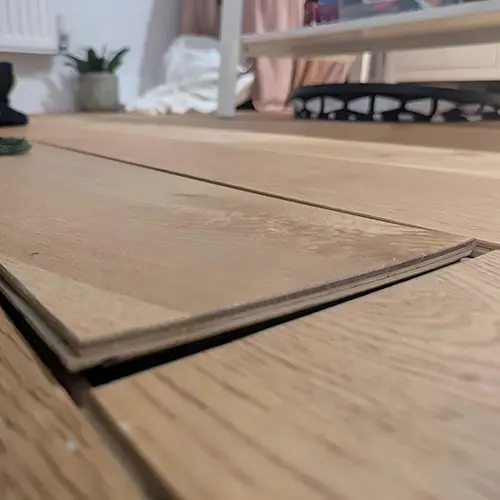
Hardwood flooring may be the gold standard of home design, but it often comes with a hefty price tag and extensive maintenance. Enter plywood flooring—a rising star in the world of budget-friendly, stylish flooring alternatives. But does it truly stack up to hardwood in quality and appearance?In this blog, we explore whether plywood flooring is a cost-effective alternative to hardwood and why premium plywood might just surprise you. Cost Comparison: Plywood vs. Hardwood When evaluating flooring options, cost is often the biggest factor. Let’s break down the numbers. Material Type Average | Cost (Per Sq. Ft.) | Installation Cost | Durability RatingHardwood | $5 – $12 |  High | Very DurablePremium Plywood | $1.50 – $4.00 | Low to Moderate | Durable Why Is Plywood Cheaper? Made from layered wood veneers instead of solid planks Uses fewer rare hardwoods Easier and faster to installDespite the lower cost, premium plywood often looks and feels like hardwood when finished properly. Benefits of Using Premium Plywood for Flooring Don’t let the word “plywood” fool you—modern plywood flooring has come a long way.1. Affordable AestheticCan mimic the look of oak, walnut, or mapleSuitable for rustic, minimalist, or modern interiors2. Easy to CustomizeTakes stains, paints, and finishes beautifullyCan be cut into wide planks or decorative shapes3. Eco-FriendlyAvailable in FSC-certified and low-VOC formatsUses less forest resources than solid hardwood4. Installation FlexibilityCan be glued, nailed, or even floatedDIY-friendly, saving you on labor costs5. Good DurabilityWorks well in low-traffic and medium-traffic areasWith sealing, it becomes moisture- and scratch-resistant Drawbacks to Consider Before Choosing Plywood Flooring While plywood flooring has many advantages, it’s not for every situation.1. Lower Lifespan Than HardwoodPlywood may need replacement after 10–15 years in high-traffic areas2. Not Ideal for Wet AreasBathrooms and basements may compromise its durability3. Visible SeamsWithout careful finishing, seams or imperfections may show4. Requires Protective CoatingNeeds polyurethane or similar sealants to resist wear and waterStill, many homeowners find that the savings and aesthetic flexibility outweigh these limitations.

Plywood Flooring: A Cost-Effective Alternative to Hardwood? Read More »

how to identify high quality plywood 2

How to Identify High-Quality Plywood: 7 Key Factors

When working on woodworking or construction projects, choosing premium plywood ensures durability, stability, and a professional finish. But with so many options available, how can you distinguish high-quality plywood from inferior grades? In this guide, we’ll reveal the 7 key factors to check when selecting top-tier plywood for your next project. 1. Check the Plywood Grade Plywood is graded based on the quality of its face veneers. Look for these markings:A-A or A-B Grade – Smooth, sanded surfaces with minimal defects (best for visible furniture and cabinetry).B-B or B-C Grade – Slightly rougher but still structurally sound (good for painted projects).Avoid C-D or D-D Grades – These have knots, patches, and imperfections (suitable only for structural, hidden uses).For premium plywood, insist on A-grade faces—especially if staining or varnishing. 2. Examine the Core Layers for Voids Cheap plywood often has gaps (voids) between layers, weakening its strength. To test:Tap the Sheet – A hollow sound indicates internal voids.Check the Edges – Look for tightly bonded layers without gaps.Opt for Baltic Birch – Known for its void-free, cross-banded core.Why It Matters: Void-free plywood resists warping and holds screws securely. 3. Assess Moisture Resistance For long-lasting projects, moisture resistance is crucial:Exterior-Grade Plywood – Uses waterproof glue (marked “EXT” or “Exterior”).Marine lywood – Highest water resistance (ideal for bathrooms/outdoor use).Avoid Interior-Grade for Damp Areas – It will delaminate when wet.Quick Test: Sprinkle water on the surface—if it beads up, the plywood is well-sealed. 4. Verify the Thickness & Consistency Premium plywood maintains uniform thickness across the entire sheet:Measure Multiple Spots – Variations indicate poor manufacturing.Standard Sizes:1/4″ (6mm) for decorative panels1/2″ (12mm) for shelves3/4″ (18mm) for heavy-duty furnitureWarning: Thin plywood (under 1/2″) may flex under weight. 5. Look for a Smooth, Defect-Free Surface Inspect both faces for:No Cracks or Patches – Indicates lower quality.Tight, Even Grain – Especially important for staining.Minimal Sanding Marks – Rough surfaces require extra prep work.Best for Finishing: Sanded A-grade plywood. 6. Consider the Wood Species Some woods offer better strength and aesthetics:Birch – Dense, smooth, and great for staining.Oak/Maple – Attractive grain for visible furniture.Avoid Softwoods (Pine/Fir) – Less durable for fine woodworking. 7. Test Structural Integrity Before buying, perform these checks:Bend Test – High-quality plywood should flex slightly but not crack.Screw-Holding Test – Drive a screw into the edge—premium plywood won’t split.Weight Comparison – Heavier plywood often indicates denser, stronger material. Final Verdict: How to Choose Premium Plywood For the best results, prioritize:A-A or A-B GradesVoid-Free Core (Baltic Birch ideal)Exterior/Marine Grade for Wet AreasConsistent Thickness & Smooth Surfaces Need help sourcing top-quality plywood? Contact us or ask questions below!

How to Identify High-Quality Plywood: 7 Key Factors Read More »

customization options

Warmly Celebrate the Launch of the New Fortuna Website!

We’re thrilled to announce that the new official Fortuna website is now live! With a refreshed design, smoother navigation, and richer product content, this new platform is built to serve you better — whether you’re exploring our premium plywood, Film Faced Plywood, MDF, OSB, particle board, or melamine board solutions. What’s New? Sleek, modern design.Faster, mobile-friendly performance.Easy access to product specs, certifications & applications.Seamless inquiry and contact system. Thank you to all our partners and customers for your continued support. Visit us now and experience the new era of Fortuna wood products!

Warmly Celebrate the Launch of the New Fortuna Website! Read More »

film faced plywood 3

Film Faced Plywood: A Comprehensive Guide

1. Introduction to Film Faced Plywood Film faced plywood is a high-performance plywood with a special coating that makes it both durable and waterproof. It’s designed to resist wear and tear while providing extended service life, especially in harsh and outdoor environments. The plywood’s two sides are coated with a durable film that protects the underlying wood, making it highly resistant to moisture and water damage. This makes it ideal for heavy-duty uses such as in construction, vehicle building, and formwork applications. The film itself is made of adhesive-impregnated paper, which differentiates it from other plywood coverings like melamine paper overlay, PVC, MDO (Medium Density Overlay), and HDO (High-Density Overlay). This added protection makes film faced plywood stand out in terms of strength and long-term utility. 2. History and Evolution of Film Faced Plywood Plywood, a material with ancient roots, evolved significantly during the 20th century, where new advancements in adhesives and coatings allowed for the creation of more specialized variants. Film faced plywood emerged as a more durable alternative to standard plywood, especially for construction and formwork needs. Its rise in popularity can be attributed to its resilience in demanding applications like outdoor use and concrete formwork. Over time, its manufacturing process has been refined, making it a staple material in heavy-duty environments. 3. Types of Film Faced Plywood Film faced plywood comes in several variations depending on the type of film and core materials used. The most common comparison is with plywoods like MDO and HDO. MDO plywood is typically used for exterior projects but lacks the same water resistance as film faced plywood. HDO, on the other hand, has a denser overlay but is still not as cost-effective or durable in certain weather conditions. Film faced plywood can also be differentiated based on its thickness, grade, and core composition, allowing buyers to choose the appropriate type for their specific project. 4. Characteristics of Film Faced Plywood The defining characteristics of film faced plywood include: Waterproof Coating: The outer film is specially designed to make the plywood waterproof, which prevents swelling or warping when exposed to moisture.Wear Resistance: The surface is highly resistant to wear and scratches, which is essential for heavy-use applications like construction formworks.Durability: With its moisture-resistant properties, this plywood has an extended service life even under the most challenging conditions.These traits make it ideal for exterior and interior applications where traditional plywood would degrade more rapidly. 5. Materials Used in Film Faced Plywood The core of film faced plywood is generally made from hardwood, softwood, or a mix of both. The key distinction lies in the outer coating, which is a film made from adhesive-impregnated paper. This film provides superior protection compared to standard melamine or PVC overlays. The use of these advanced materials contributes to its overall strength, durability, and moisture resistance.

Film Faced Plywood: A Comprehensive Guide Read More »

Scroll to Top