
Table of Contents
When it comes to building or renovating, not all plywood is created equal. If you’ve ever walked into a lumberyard and heard the term “sheathing plywood,” you might have wondered: What exactly is it—and why should I care?
Whether you’re framing a new home, reinforcing a roof, or tackling a commercial construction project, understanding sheathing plywood can save you time, money, and headaches down the line. Let’s break it down—no jargon, just practical insights.
What Exactly Is Sheathing Plywood?
Sheathing plywood is a type of structural panel engineered specifically for use in walls, roofs, and floors as a base layer beneath exterior finishes like siding, shingles, or drywall. Unlike decorative or furniture-grade plywood, sheathing prioritizes strength, dimensional stability, and moisture resistance over appearance.
Made from cross-laminated veneers bonded with waterproof adhesives (often phenol-formaldehyde), it’s designed to withstand harsh conditions during and after construction. Most sheathing plywood carries a PS 2 (Performance Standard 2) rating from the APA – The Engineered Wood Association, ensuring it meets rigorous structural requirements.
Common thicknesses range from ¼” to ¾”, with ½” and 5/8″ being the most widely used for residential wall and roof applications.
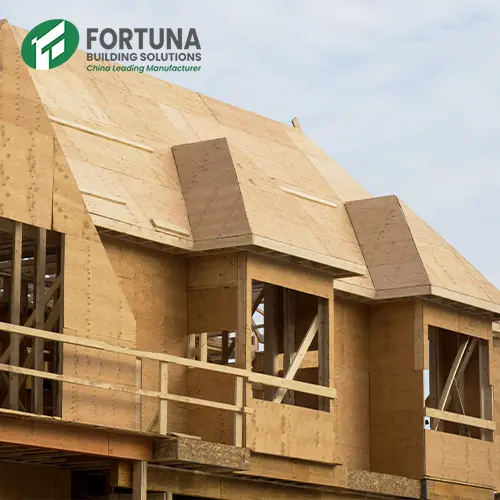
Why Choose Sheathing Plywood Over Other Panels?
You might be wondering: Can’t I just use OSB or regular plywood? Technically, yes—but there are key differences:
- Sheathing plywood vs. OSB: Both are structural, but plywood generally handles moisture better and recovers more effectively if it gets wet during construction.
- Sheathing plywood vs. sanded plywood: Sanded panels look nicer but lack the glue durability and shear strength needed for load-bearing applications.
- Code compliance: Many local building codes specify plywood sheathing for seismic or high-wind zones due to its superior nail-holding power and rigidity.
In short: if your project demands reliability under stress—and most do—sheathing plywood is the smart baseline choice.
Common Applications in Real-World Projects
Here’s where you’ll typically see sheathing plywood in action:
- Wall sheathing: Provides lateral bracing and a nailing surface for siding.
- Roof decking: Forms a stable base for roofing materials; often used in areas prone to heavy rain or snow.
- Subflooring: Especially in high-moisture environments like bathrooms or kitchens (though tongue-and-groove variants are preferred here).
- Concrete formwork: Temporary molds for pouring concrete foundations or walls.
Pro tip: Always check whether your sheathing carries an Exposure 1 or Exterior rating. “Exposure 1” means it can handle temporary weather exposure during construction—not long-term outdoor use.
How to Buy the Right Sheathing Plywood
Not all sheathing panels are stamped the same. When shopping, look for:
- APA grade stamp: Confirms it meets U.S. performance standards.
- Span ratings: Indicates maximum support spacing (e.g., “48/24” means 48″ on center for roof, 24″ for floor).
- Edge profiles: Square-edge for general use; tongue-and-groove for subfloors to reduce squeaking.
And remember—price isn’t everything. A slightly higher upfront cost for quality sheathing can prevent costly callbacks or structural issues later.
Final Thoughts
Sheathing plywood might not win any beauty contests, but in the world of construction, it’s the unsung hero holding everything together—literally. For contractors, builders, and serious DIYers, choosing the right sheathing isn’t just about meeting code—it’s about building smarter, safer, and more efficiently.
Ready to spec your next project? Make sure sheathing plywood is on your material list from day one.