
Choosing the right MDF board is one of the most important purchasing decisions in furniture manufacturing. The quality of the board directly influences machining efficiency, surface finishing, product durability, production costs, and ultimately customer satisfaction.
However, many buyers still compare suppliers based primarily on price or basic specifications. While thickness and quotations are important, they reveal very little about how the board will actually perform during production.
Two MDF sheets with the same dimensions may produce completely different results on the production line. Differences in density consistency, fiber quality, surface smoothness, resin formulation, moisture resistance, and manufacturing control can significantly affect CNC machining, edge profiling, painting quality, and long-term product stability.
For manufacturers producing kitchen cabinets, wardrobes, office furniture, decorative panels, or commercial interiors, selecting the appropriate medium density fibreboard is about minimizing total manufacturing costs rather than simply reducing purchasing costs.
This guide explains how professional buyers evaluate MDF board, compare different board types, assess supplier capability, and choose a reliable MDF manufacturer for long-term wholesale cooperation. Whether you are sourcing container quantities from China or looking for a dependable global MDF supplier, the following framework will help you make informed purchasing decisions.
Quick Answer
The right MDF board depends on your furniture application, machining requirements, environmental conditions, and long-term quality expectations—not simply the lowest quotation.
For most indoor furniture, standard medium density fibreboard offers an excellent balance between machining performance and cost. Projects exposed to higher humidity, such as kitchen cabinets or bathroom furniture, generally benefit from moisture resistant MDF, while commercial buildings requiring fire compliance should consider fire rated MDF board.
Before placing wholesale orders, experienced buyers evaluate five critical factors:
- Application suitability
- Board density and consistency
- Surface quality
- Environmental certifications
- Manufacturing capability
Choosing an experienced MDF board manufacturer with stable production systems often reduces machining waste, improves production efficiency, and lowers the overall cost of furniture manufacturing.
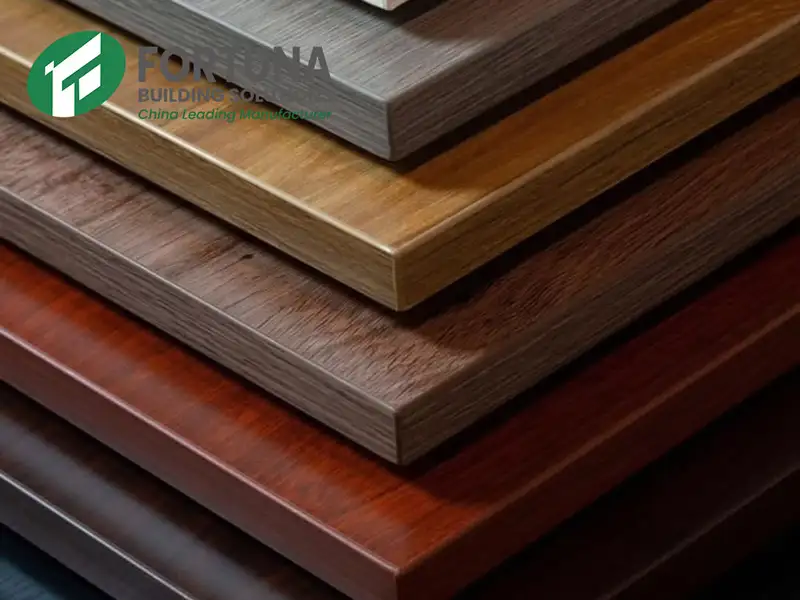
MDF Procurement Decision Framework
Instead of choosing materials based only on price, experienced sourcing teams typically follow a structured evaluation process.
Why Professional Furniture Manufacturers Never Buy MDF Based on Price Alone
One of the most common misconceptions in international sourcing is that the cheapest MDF board delivers the lowest production cost.
In reality, experienced buyers evaluate materials from a completely different perspective.
Furniture manufacturing involves multiple production stages—including cutting, CNC routing, drilling, edge profiling, sanding, lamination, painting, packaging, and assembly. If the board performs inconsistently at any stage, production efficiency declines and hidden costs begin to accumulate.
For example, poor density consistency can cause uneven machining. Rough surfaces require additional sanding before painting. Weak internal bonding may reduce screw-holding strength, while inconsistent moisture content can affect dimensional stability after installation.
These problems rarely appear on a supplier’s quotation sheet, yet they can increase labor costs, material waste, production delays, and customer complaints.
Professional buyers therefore focus on total manufacturing cost, which includes:
- Material utilization
- Machining efficiency
- Surface finishing quality
- Reject rate
- Production consistency
- Delivery reliability
- Long-term product performance
A board with a slightly higher purchase price but more consistent quality often delivers significantly better value over the entire production cycle.
What Makes MDF Board the Preferred Choice for Furniture Manufacturing?
Among engineered wood panels, MDF board has become one of the most widely used materials in modern furniture manufacturing because it offers an excellent combination of precision, versatility, and cost efficiency.
Unlike natural solid wood, medium density fiberboard is manufactured by refining wood fibers, blending them with resin, and pressing them under carefully controlled temperature and pressure. The result is a homogeneous panel with uniform internal structure and excellent machining characteristics.
For manufacturers producing large volumes of furniture, this consistency is particularly valuable because every panel behaves predictably during processing.
High-quality MDF panels provide several advantages:
- Smooth surfaces for painting, veneering, PVC, PET, UV, or melamine finishes.
- Uniform density for accurate CNC machining and edge profiling.
- Stable dimensions that improve assembly precision.
- Excellent workability with reduced tool wear.
- Competitive cost compared with many solid wood alternatives.
These characteristics make MDF board an ideal material for:
- Kitchen cabinets
- Bedroom wardrobes
- Office furniture
- TV cabinets
- Shelving systems
- Decorative wall panels
- Display fixtures
- Interior doors
- Commercial furniture
- Retail shop fittings
However, it is important to understand that not every MDF board is manufactured to the same standard.
Raw material selection, fiber preparation, pressing technology, sanding precision, resin quality, moisture control, and factory quality management all influence the final performance of the panel.
This is why selecting a reliable MDF supplier is just as important as selecting the correct board specification.
Expert Insight
Professional furniture manufacturers rarely ask:
“Who offers the cheapest MDF board?”
Instead, they ask:
“Which MDF manufacturer can consistently deliver the same quality across every shipment?”
The difference between these two questions often determines whether a purchasing decision creates long-term value or long-term production problems.
For companies manufacturing thousands of furniture components every month, consistency is often far more valuable than a small reduction in purchase price.
At a Glance: What Really Determines MDF Quality?
When comparing quotations from different MDF suppliers, focus on these five factors before comparing prices:
| Evaluation Factor | Why It Matters |
|---|---|
| Density Consistency | Improves machining accuracy and product stability |
| Surface Smoothness | Better painting, laminating, and finishing quality |
| Moisture Resistance | Reduces swelling in humid environments |
| Environmental Compliance | Supports international export requirements |
| Manufacturing Consistency | Ensures stable quality across every shipment |
Choosing the Right MDF Board for Different Furniture Applications
Not every furniture project requires the same type of MDF board.
One of the most common sourcing mistakes is selecting a board based solely on price or general specifications without considering its actual application. While two products may appear similar on paper, their performance can vary significantly depending on where and how they are used.
Professional buyers begin by asking a simple question:
What performance does this furniture actually require?
A wardrobe for a dry bedroom has very different requirements from a kitchen cabinet exposed to humidity or a reception desk installed in a busy commercial building. Choosing the right MDF board according to the application improves manufacturing efficiency, extends product life, and helps avoid unnecessary warranty claims.
MDF Application Guide
The following recommendations reflect common industry practices used by furniture manufacturers and interior contractors.
| Furniture Application | Recommended Board | Why It Is Recommended |
|---|---|---|
| Bedroom Wardrobes | Standard MDF board | Cost-effective with excellent machining performance |
| Kitchen Cabinets | Moisture resistant MDF | Better dimensional stability in humid environments |
| Bathroom Vanities | MR MDF board | Reduces swelling caused by moisture exposure |
| Office Furniture | High-density MDF panel | Better screw holding and structural strength |
| Painted Furniture | Premium MDF sheets | Smooth surface produces superior paint finishes |
| Interior Wall Panels | Standard or Melamine-Faced MDF | Easy processing with decorative surface options |
| Interior Doors & Door Components | High-density medium density fibreboard | Excellent routing performance and stable edge quality |
| Retail Displays & Shop Fittings | High-density MDF board | Improved durability for frequent use |
The best material is not necessarily the highest specification—it is the board that best matches the manufacturing process and the final application.
Recommended MDF Thickness Guide
Thickness affects both structural performance and production cost.
Selecting a thicker board than necessary increases material costs and shipping weight, while choosing a board that is too thin may reduce product strength and durability.
The following table provides a practical reference for common furniture applications.
| Application | Recommended Thickness |
|---|---|
| Drawer Bottom | 3–6 mm |
| Cabinet Back Panel | 5–9 mm |
| Decorative Wall Panels | 9–12 mm |
| Drawer Sides | 12 mm |
| Wardrobes & Cabinets | 15–18 mm |
| Office Furniture | 18 mm |
| Bookshelves | 18–25 mm |
| Countertops & Heavy Shelving | 25 mm |
The Five Quality Factors That Matter More Than Price
When comparing quotations from different MDF suppliers, many buyers focus on thickness, density, and price.
However, experienced procurement teams know that these figures alone cannot predict how a board will perform during production.
The following five factors often have a much greater impact on manufacturing efficiency and furniture quality.
1. Density Consistency
Density is one of the most important indicators of board performance.
Consistent density improves:
- CNC machining accuracy
- Edge profiling quality
- Screw holding strength
- Dimensional stability
- Production consistency between batches
- Inconsistent density often causes uneven cutting, edge chipping, poor screw retention, and unnecessary production waste.
When evaluating an MDF manufacturer, ask not only for the density specification, but also how density consistency is monitored throughout production.
2. Surface Smoothness
A smooth surface reduces preparation work before painting, laminating, veneering, or applying decorative finishes.
High-quality MDF panels provide:
- Better paint adhesion
- More uniform color appearance
- Reduced sanding time
- Improved decorative finish quality
For furniture manufacturers producing premium painted cabinets or PET-laminated panels, surface quality directly influences both production efficiency and the appearance of the finished product.
3. Moisture Resistance
Standard medium density fiberboard performs well in dry indoor environments, but projects exposed to higher humidity require additional protection.
For kitchens, bathrooms, laundry rooms, and other humid interiors, MR MDF board offers improved dimensional stability and helps reduce swelling caused by moisture.
It is important to note that moisture-resistant MDF is designed to withstand humidity—it is not intended for continuous water exposure or outdoor use.
Selecting the correct board at the beginning of a project is usually more cost-effective than dealing with product failures after installation.
4. Environmental Compliance
International buyers increasingly need materials that meet environmental and regulatory standards.
Depending on the destination market, common requirements include:
- FSC® certification
- CE certification
- CARB P2
- EPA TSCA Title VI
- ISO 9001 quality management
Working with an experienced MDF exporter that understands these requirements can simplify customs clearance, project approval, and customer compliance.
5. Manufacturing Consistency
Even when specifications appear identical, production quality can vary significantly between factories.
Reliable MDF board manufacturers invest in:
- Stable raw material selection
- Precision fiber refining
- Automated hot pressing
- Accurate sanding calibration
- Strict moisture control
- Batch-by-batch quality inspection
These manufacturing controls help ensure that every shipment delivers the same machining performance, surface quality, and dimensional accuracy.
For large furniture manufacturers and distributors, this consistency is often more valuable than achieving the lowest purchase price.
Expert Recommendation
Professional buyers rarely compare suppliers using price alone.
Instead, they evaluate whether a supplier can consistently deliver boards that perform reliably throughout every stage of manufacturing.
Before placing a bulk order, ask yourself these five questions:
- Is this the right MDF board for my application?
- Is the board thickness appropriate for the product?
- Can the supplier maintain consistent density across every shipment?
- Does the board comply with the standards required in my target market?
- Can the manufacturer support long-term supply with stable quality?
If the answer to all five questions is “yes,” you are far more likely to achieve lower total manufacturing costs, fewer production issues, and stronger long-term business performance
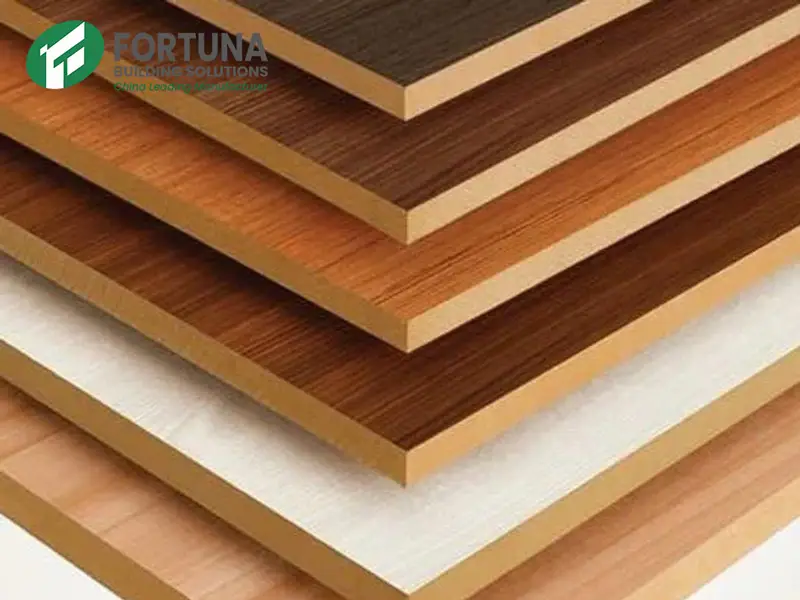
How to Evaluate an MDF Board Manufacturer Before Placing Bulk Orders
Selecting the right MDF panels is only half of a successful sourcing strategy.
The other half is choosing a manufacturer capable of delivering the same quality—not just in the first shipment, but in every shipment over the course of a long-term partnership.
Many buyers compare quotations from several MDF suppliers and assume that similar specifications indicate similar quality. In reality, production capability, quality management, and manufacturing consistency often vary significantly between factories.
Before placing a bulk order, experienced procurement teams typically evaluate the following five areas.
1. Manufacturing Experience
Years in business alone do not guarantee product quality, but long-term manufacturing experience often reflects a supplier’s ability to refine production processes, maintain quality standards, and adapt to changing market requirements.
An experienced MDF board manufacturer is more likely to understand:
- Different furniture manufacturing processes.
- Export requirements across international markets.
- Application-specific product recommendations.
- Stable quality control procedures.
Rather than asking “How long has the factory existed?”, buyers should ask:
“How does your manufacturing experience help improve product consistency for my application?”
2. Production Technology
Modern equipment plays a crucial role in producing consistent medium density fibreboard.
When evaluating a supplier, consider whether the factory operates:
- Automated fiber preparation systems.
- Precision hot pressing lines.
- Continuous sanding equipment.
- Thickness calibration systems.
- Moisture control during production.
Well-maintained production equipment contributes to more uniform density, smoother surfaces, and tighter dimensional tolerances.
3. Quality Control System
Reliable manufacturers do more than inspect finished boards.
Quality control should cover every stage of production—from raw material selection to final packaging.
A comprehensive inspection process generally includes:
- Thickness tolerance.
- Density consistency.
- Moisture content.
- Internal bonding strength.
- Surface smoothness.
- Formaldehyde emission.
- Edge quality.
- Panel dimensions.
The more standardized the inspection process, the more predictable the performance of every shipment.
4. International Certifications
Certification is not simply a marketing advantage—it demonstrates that products comply with recognized quality and environmental standards.
Depending on the destination market, buyers commonly request:
- FSC®
- CE
- CARB P2
- EPA TSCA Title VI
- ISO 9001
Verifying certificates before placing orders helps reduce compliance risks for export projects.
5. Stable Production & Delivery Capability
Even high-quality panels become a problem if deliveries are delayed or specifications vary between orders.
Professional buyers therefore also evaluate:
- Annual production capacity.
- Lead time consistency.
- Export experience.
- Container loading efficiency.
- Long-term supply capability.
Stable manufacturing supports better production planning and reduces the risk of project delays.
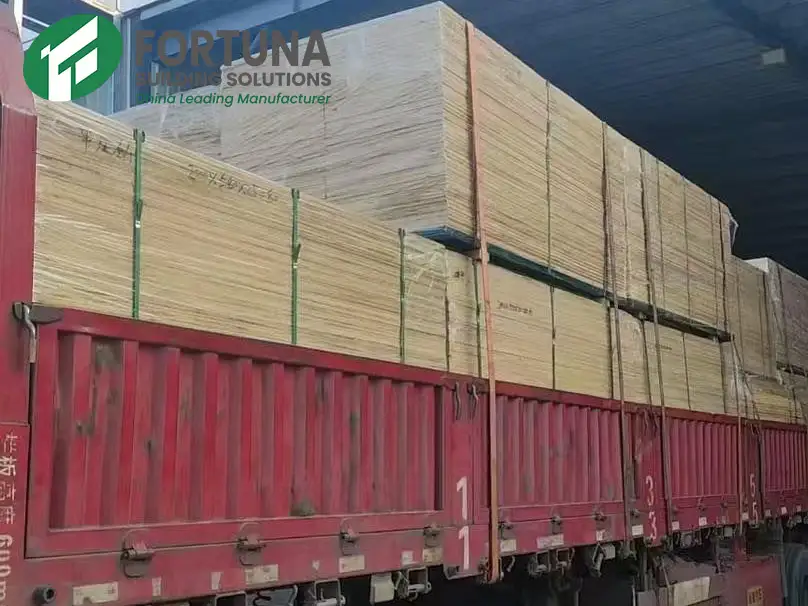
Buyer Decision Matrix
Before comparing quotations, identify your primary purchasing priority.
| Your Priority | Recommended Solution |
|---|---|
| Lowest purchase cost | Standard MDF board from a reliable supplier |
| Kitchen & bathroom furniture | Moisture resistant MDF |
| Premium painted furniture | High-density MDF panel with superior surface quality |
| Commercial & public projects | Fire rated MDF board |
| Export projects | FSC®, CE, CARB P2 compliant products |
| Long-term manufacturing | Experienced MDF manufacturer with stable production |
This simple decision matrix helps buyers move beyond price comparisons and focus on selecting the most suitable solution for their business.
Procurement Case Study 1
How Consistent Board Quality Improved Furniture Manufacturing Efficiency
A furniture manufacturer in Southeast Asia producing wardrobes and kitchen cabinets had been purchasing MDF board from multiple suppliers based primarily on price.
Although the quoted specifications appeared nearly identical, production teams experienced several recurring issues:
- Density varied noticeably between shipments.
- Surface quality required additional sanding before painting.
- Edge chipping occurred during CNC routing.
- Different batches produced inconsistent machining results.
Production schedules became increasingly difficult to manage.
While each issue seemed minor on its own, together they resulted in additional labor, increased material waste, and frequent production interruptions.
The manufacturer decided to reassess its sourcing strategy, focusing on manufacturing capability rather than unit price alone.
After evaluating production facilities, quality management systems, and export experience, the company selected Fortunaply as its long-term supply partner.
Instead of simply supplying the same specification, Fortunaply’s technical team reviewed the customer’s production process and recommended a board specification better suited to their CNC machining and painted furniture applications.
The solution included:
- More consistent board density for improved machining accuracy.
- Better surface smoothness to reduce sanding before finishing.
- Stable thickness tolerance across production batches.
- Strict moisture control during manufacturing.
- Reliable production scheduling for repeat container orders.
As production continued, the customer achieved:
- More consistent machining performance.
- Reduced rework during finishing.
- Better production planning.
- More stable product quality across different batches.
- Greater confidence when accepting large export orders.
The most important improvement was not a lower board price—it was a more efficient manufacturing process supported by stable material quality and dependable supply.
Procurement Case Study 2
Supporting an Interior Decoration Project with Reliable Supply
An interior decoration contractor was responsible for furnishing a large commercial office project with custom wall panels, storage cabinets, and reception furniture.
The project required:
- Uniform panel appearance.
- Low formaldehyde emissions.
- Consistent dimensions.
- Reliable delivery within a fixed installation schedule.
Rather than selecting the lowest quotation, the contractor prioritized manufacturing capability and long-term supply reliability.
Working closely with the project team, Fortunaply coordinated production planning, quality inspections, and container loading according to the customer’s installation timeline.
By maintaining consistent product quality and dependable delivery, the contractor completed the project without material-related interruptions, reducing procurement risk and helping keep the installation schedule on track.
Why Manufacturing Consistency Creates Long-Term Value
Many buyers focus on reducing the purchase price of each container.
Experienced manufacturers focus on reducing the total cost of production.
Consistent MDF sheets help manufacturers:
- Improve CNC machining efficiency.
- Reduce material waste.
- Shorten finishing time.
- Maintain consistent furniture quality.
- Improve on-time delivery performance.
For this reason, successful sourcing is rarely determined by the lowest quotation.
It is determined by selecting an MDF supplier capable of delivering the same quality, shipment after shipment.
Expert Insight
The best supplier is not the one that offers the cheapest board today.
It is the one that helps your factory produce better furniture tomorrow—and continues to do so for years to come.
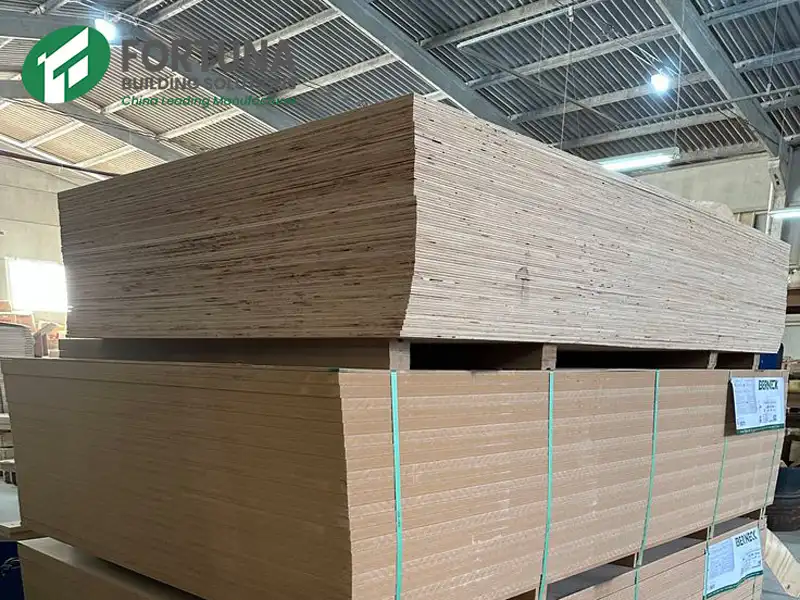
Why Global Furniture Manufacturers Partner with Fortunaply
Choosing the right MDF supplier is more than comparing quotations or production capacity. For furniture manufacturers, distributors, and project contractors, the ideal supplier is one that consistently helps reduce production risks, improve efficiency, and support long-term business growth.
At Fortunaply, we believe our value is measured not by the number of panels we produce, but by the success of our customers’ manufacturing operations.
With more than 30 years of manufacturing experience, we understand that buyers expect much more than standard product specifications. They need reliable supply, consistent quality, technical support, and a partner who understands the realities of international sourcing.
How Fortunaply Creates Value for Buyers
Instead of simply supplying MDF boards, we focus on helping customers build a more reliable and efficient supply chain.
Stable Manufacturing for Long-Term Projects
Established in 1993, Fortunaply operates a 208,000㎡ production base with an annual capacity exceeding 300,000m³.
For buyers, this means:
- Consistent production quality across repeat orders.
- Reliable lead times for container shipments.
- Stable supply for long-term furniture manufacturing.
- Reduced procurement risks during large-scale projects.
Whether you purchase one container or require continuous monthly shipments, manufacturing stability is essential for keeping production schedules on track.
Certified Quality That Supports Global Markets
International projects increasingly require products that comply with recognized environmental and quality standards.
Our products are manufactured under strict quality management systems and are available with certifications including:
- FSC®
- CE
- CARB P2
- ISO 9001
For exporters, distributors, and furniture manufacturers, certified products help simplify market access, support customer requirements, and reduce compliance risks.
Product Solutions Designed Around Your Manufacturing Needs
Every furniture factory has different production methods, machinery, and quality expectations.
Rather than recommending the same board for every customer, Fortunaply works with buyers to identify the most suitable solution based on:
- Furniture application.
- Processing methods.
- Surface finish requirements.
- Density requirements.
- Export destination.
- Cost-performance objectives.
This consultative approach helps customers select the right MDF board, rather than simply purchasing the lowest-priced option.
Flexible OEM & Wholesale Support
In addition to standard specifications, Fortunaply supports:
- OEM manufacturing.
- Customized panel sizes.
- Private label production.
- Bulk container supply.
- Long-term distributor cooperation.
For customers developing their own brands or managing multiple projects, this flexibility reduces sourcing complexity while improving supply continuity.
MDF Board Buyer's Checklist
Before confirming your next purchase, use the following checklist to evaluate both the product and the supplier.
Product Evaluation
✔ Select the appropriate MDF board type for the application.
✔ Confirm board thickness and density.
✔ Verify moisture resistance requirements.
✔ Review surface quality for painting or lamination.
✔ Confirm formaldehyde emission standards.
Supplier Evaluation
✔ Review manufacturing experience.
✔ Verify FSC®, CE, CARB P2, and ISO certifications.
✔ Assess production capacity and lead times.
✔ Request production samples before bulk orders.
✔ Confirm quality inspection procedures.
✔ Evaluate export experience and packaging standards.
A structured procurement process helps reduce sourcing risks and supports more predictable manufacturing performance.
Frequently Asked Questions
What is the best MDF board for furniture manufacturing?
The best choice depends on the application. Standard MDF board is suitable for most indoor furniture, while MR MDF board is recommended for humid environments such as kitchens and bathrooms. Fire-rated MDF should be selected when projects require enhanced fire performance.
How do I choose a reliable MDF manufacturer?
Look beyond quotations. Evaluate manufacturing experience, quality control procedures, certifications, production capacity, export experience, and the supplier’s ability to maintain consistent quality across multiple shipments.
Does higher-density MDF always mean better quality?
Not necessarily.
Higher density generally improves screw-holding strength and machining performance, but the most suitable density depends on the intended application. Consistency across production batches is often more important than simply selecting the highest density available.
Is moisture resistant MDF waterproof?
No.
Moisture resistant MDF is designed to perform better in humid indoor environments, but it is not intended for continuous water exposure or outdoor applications.
Why is sample testing important before placing wholesale orders?
Testing allows buyers to evaluate machining performance, surface quality, dimensional accuracy, and finishing results before committing to container quantities. It is one of the most effective ways to reduce procurement risk.
Can Fortunaply support OEM projects?
Yes.
As the leading MDF manufacturer, Fortunaply offers OEM manufacturing, customized specifications, private labeling, and long-term wholesale supply for furniture manufacturers, distributors, and project contractors worldwide.
Key Takeaways
If you remember only a few points from this guide, make them these:
- Choose the MDF board according to the furniture application—not simply the lowest quotation.
- Evaluate density consistency, surface quality, and manufacturing standards before comparing prices.
- Select a supplier capable of delivering stable quality across every shipment.
- Verify certifications and sample performance before placing bulk orders.
- Build long-term partnerships with experienced manufacturers who understand your production requirements.
- Successful sourcing is not about finding the cheapest board.
It is about finding the right board from the right supplier—one that consistently supports your manufacturing goals, product quality, and business growth.
Conclusion
The quality of your finished furniture is determined long before the first panel enters the CNC machine.
Choosing the appropriate MDF board, understanding how density and thickness influence performance, and partnering with an experienced MDF manufacturer all contribute to lower production costs, higher product quality, and more reliable delivery.
Whether you are sourcing wholesale MDF board, developing a new furniture collection, or looking for a dependable long-term MDF supplier, a structured procurement strategy will always deliver better results than selecting materials based on price alone.
If you are planning your next project, explore Fortunaply‘s complete range of MDF solutions or contact our team for technical recommendations, product samples, and customized quotations tailored to your manufacturing requirements.