Table of Contents
Understanding MDF in Modern Manufacturing
MDF—short for Medium Density Fiberboard—is one of today’s most widely used engineered wood materials. In the first 10% of this article, it’s important to highlight that MDF is created by breaking down softwood fibers, mixing them with resin, and pressing them into dense, smooth panels. For wholesalers and project-based customers, MDF offers consistency, affordability, and stable supply—qualities essential for long-term partnerships.
Unlike natural wood, MDF is highly uniform. It has no knots, grain inconsistencies, or internal gaps, making it ideal for CNC machining, router work, lamination, and large-scale production lines.
How MDF Is Made
The process includes:
- Fiber refining
- Resin blending
- Hot pressing
- Sanding
- Quality grading
These steps ensure stable density and a smooth surface suitable for premium finishing.
MDF vs Other Engineered Wood Products
MDF vs Plywood
- MDF is smoother and easier to rout
- Plywood is stronger in load-bearing applications
MDF vs Particleboard
- MDF is denser, stronger, and machines better
- Particleboard is cheaper but less durable
When to Choose MDF
Choose MDF when you need:
- Consistent texture
- High-quality finishing
- Clean, sharp edges
Key Technical Properties of MDF (Density, Strength, Moisture Resistance)
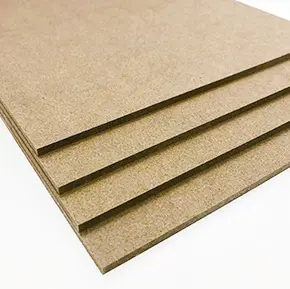
Standard MDF
Suitable for furniture, cabinets, partitions, displays.
High-Density MDF (HDF)
Used for flooring, interior doors, and high-performance applications.
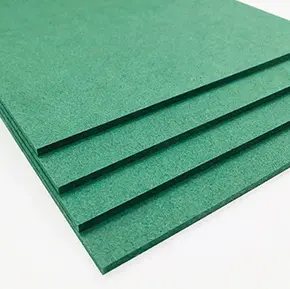
Moisture-Resistant MDF (MR MDF)
Ideal for kitchens, bathrooms, and commercial interiors with high humidity.
Why MDF Is Popular Among B2B Buyers
For wholesalers and importers, MDF provides:
- Stable pricing that improves margin planning
- Reliable supply due to large global manufacturing capacity
- Low waste thanks to consistent density
- Easy processing that reduces labor time
For project contractors, MDF helps speed up installation and reduce finishing costs.
Common Industrial Applications of MDF
MDF is widely used across:
- Commercial furniture manufacturing
- Cabinets and wardrobes
- Interior wall panels
- Door skins and frames
- Retail store fixtures
- Acoustic panels
- Decorative elements for hotels & offices
Its versatility makes it a go-to choice for large-scale projects.
MDF Specifications Wholesalers Must Know
| Parameter | Typical Options |
| Sheet Size | 1220×2440mm / 1830×2440mm / Custom |
| Thickness | 2.5mm – 25mm |
| Density | 650–880 kg/m³ |
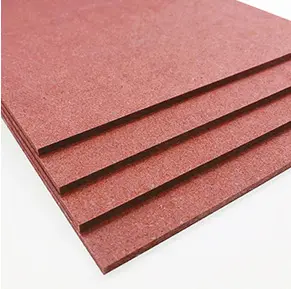
| Grades | Standard / HDF / MR / Fire-Rated |
Surface Types and Finishing Options for MDF
- Raw MDF: Suitable for painting and laminating
- Melamine MDF: Ready-made colors for cabinets and wardrobes
- Veneered MDF: Natural wood appearance with stable core
- PVC Laminated MDF: Durable and moisture-friendly
MDF for Large-Scale Projects and Contracting
Contractors value MDF because:
- It machines cleanly
- It doesn’t warp under stable indoor conditions
- It works perfectly with CNC cutting and shaping
- It supports mass production with minimal batch variation
Whether you’re delivering 500 hotel rooms or outfitting a commercial mall, MDF ensures uniformity.
MOQ, Lead Time & Logistics Considerations
Wholesalers typically order:
- FCL (Full Container Load) shipments
- 20GP, 40GP, or 40HQ containers
Lead times average 15–25 days, depending on finish and grade. Palletized or loose-loading options are available depending on exporter capabilities.
Environmental Standards and Certifications
Reliable MDF manufacturers comply with:
- CARB Phase II
- EPA TSCA Title VI
- E0/E1 Formaldehyde Standards
- FSC Certification (for sustainable forestry)
How to Choose a Reliable MDF Supplier
Look for:
- In-house testing equipment
- Quality control at each production stage
- Competitive MOQ options
- Transparent pricing
- Consistent density and bonding strength
Factory capacity also matters—larger mills offer more stable supply.
The Future of MDF in Global Markets
The demand for MDF continues to grow due to:
- Affordable housing projects
- Modern modular furniture
- Expansion of interior construction markets
Tech innovations—including waterproof MDF and fire-resistant MDF—are increasing adoption.
Using MDF to Improve Project Cost Performance
MDF helps reduce:
- Material waste
- Finishing time
- Edge treatment cost
- CNC machining expenses
This makes it a top choice for procurement managers aiming to control budgets.
Common Challenges & Practical Solutions with MDF
| Challenge | Solutio |
| Moisture issues | Use MR MDF / Seal edges |
| Edge deterioration | Use edge banding |
| Screw holding strength | Pre-drill holes / Use confirmat screws |
| Heavy weight | Choose lighter MDF variants |
FAQs About MDF
1. What is MDF mainly used for in B2B projects?
Furniture, cabinets, doors, retail fixtures, and interior panels.
2. Is MDF strong enough for commercial use?
Yes—commercial-grade MDF is dense and stable, perfect for professional projects.
3. Can MDF be used in humidity-prone areas?
Yes, but select moisture-resistant MDF for bathrooms and kitchens.
4. How do wholesalers ensure MDF quality?
Check density, bonding strength, formaldehyde levels, and surface flatness.
5. Is MDF safe for indoor use?
MDF that meets E0/E1 or CARB standards is safe for interior environments.
6. Can MDF be customized in bulk?
Yes—suppliers can provide custom thickness, dimensions, lamination, and colors for large orders.
Final Thoughts
MDF remains one of the most practical, affordable, and stable materials for B2B buyers—especially wholesalers, distributors, and project contractors. Its consistency, machinability, and wide range of applications make it a reliable choice for large-scale commercial and residential projects. With the right supplier, MDF can significantly improve production efficiency and cost performance.
Related Articles
Recommended Products